

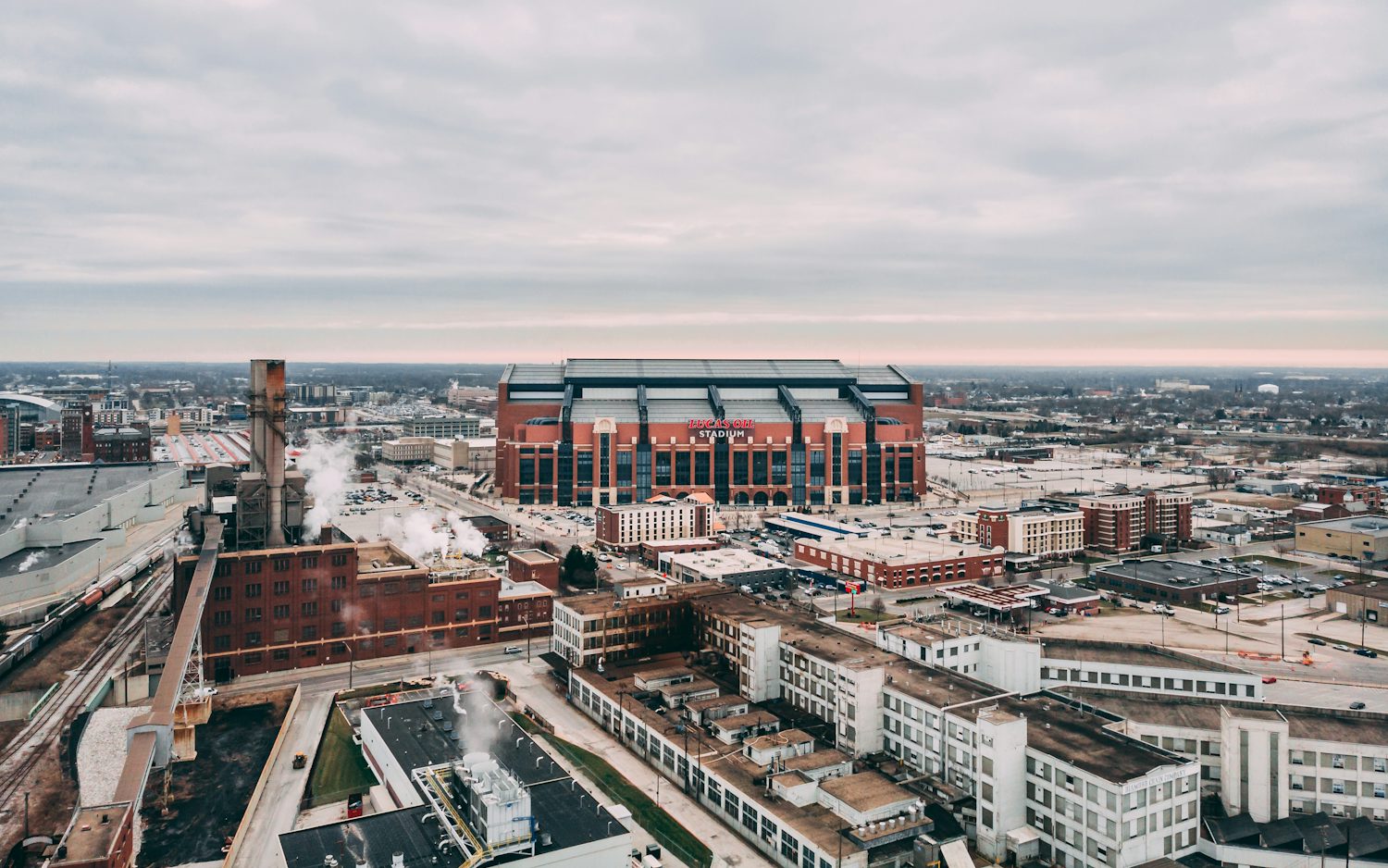
Local SEO in Indianapolis comes down to three things Google weighs: relevance, distance, and prominence. You control relevance and prominence with a finished Google Business Profile, steady recent reviews, matching listings, and pages that name your service and your town. Distance you can’t change. And in a metro this spread out, it decides a lot.
Maybe you run a shop in Broad Ripple, a plumbing company out of Greenwood, or a salon on Mass Ave. You built something real, and you’ve probably noticed that “Indianapolis” isn’t one place when someone searches. A homeowner in Carmel and a diner in Fountain Square see different results for the same words. That’s the whole game... and it’s better news than it sounds. You don’t have to win the metro. You have to win your corner of it.
Why is local search in Indianapolis different from a smaller town?
Scale, mostly. Here’s why. Indianapolis has roughly 900,000 residents, and Carmel and Fishers each top 100,000, per U.S. Census Bureau estimates for July 2025 as compiled by CityPopulation.de. Noblesville, Greenwood, and Westfield are each north of 65,000. That’s a lot of searchers and a lot of competitors, spread across a dozen town and neighborhood names. Lots of people. Lots of options. Lots of noise.
Google’s own guidance says local results depend on relevance, distance, and prominence. Distance is measured from the searcher, not from downtown. So a plumber in Greenwood and a plumber in Noblesville may both say “Indianapolis” on their websites and never compete for the same customer.
Whitespark’s 2026 Local Search Ranking Factors survey ranks your profile’s primary category as the number one factor. That’s relevance, and it costs nothing to fix. It’s also why “roofing contractor” is a better pick than “contractor,” wherever your shop sits.
Customers decide fast, too. BrightLocal’s 2026 Consumer Search Behavior research found 75% of consumers take less than 30 minutes to choose a local business, and 72% look at three or fewer. So if you’re not one of the first three they see, you may never be in the running.
Where are you actually competing?
Here’s how it shows up across town. A rough map, from the neighborhoods people walk to the suburbs people drive between. Take it as a starting point for your first move, not a ranking promise.
| Where you are | The local problem | First move |
|---|---|---|
| Downtown, Mass Ave, Fountain Square | Lots of nearby restaurants, shops, and salons, and customers choosing in minutes | Recent photos and accurate hours, plus a steady flow of new reviews |
| Broad Ripple, Irvington | Neighborhood loyalty is strong, but a newcomer can win it | Name the neighborhood in your description and on your site, in plain words |
| Carmel, Fishers, Zionsville, Noblesville, Westfield | Established companies and a lot of searchers who won’t drive far | The right service area, a specific category, and reviews that mention real jobs |
| Greenwood, Avon, Brownsburg | You’re the nearby option for your side of town, if Google can see it | A finished profile and one page per core service |
| Speedway, Lawrence, Beech Grove | Their own small cities and towns inside Marion County, close to everything and easy to overlook | Your own town name in your page title and a matching address on every listing |
Don’t get us wrong, the map has a catch. Listing a town in your service area doesn’t make you rank there. A Zionsville bakery is unlikely to show up for a searcher in Beech Grove no matter what its profile says. Be honest with yourself about your radius.
What should an Indianapolis business do first?
The same short list works in Indy as anywhere. Do it in this order. And most of it is free.
- Finish your Google Business Profile. Most of the gain is in the category, the service list, the hours, and real photos. Our profile checklist walks through every field.
- Ask every customer for a review, the same way, every time. BrightLocal’s 2026 review survey found 47% of consumers won’t use a business with fewer than 20 reviews. The rules and the routine are in how to get more Google reviews.
- Make your name, address, and phone identical everywhere. Check Yelp, Facebook, Bing, and Apple Maps too. That last one matters more now: the same BrightLocal survey found use of Apple Maps for reviews nearly doubled in a year, from 14% to 27%.
- Say what you do and where, in the title and headline of your homepage. Add one line naming the towns you really serve. Skip a separate page for every suburb. A thin page per town tends to read as filler.
- Earn a few real mentions. Google ties prominence to links from other sites, so a chamber of commerce listing, a neighborhood association, or a sponsored youth team all count. Pick the ones that are true.
- Write down your starting numbers. In your profile’s Performance tab, note calls, direction requests, and website clicks, then look again next month.
In our book, most Indy owners should do all 6 before spending a dollar on ads. If your listing has 11 reviews and no photos, a paid click just sends a stranger to a thin page. If you only do one thing this week, make it step 1. Our five usual causes piece covers what to check if you’re still invisible after that.
Does AI search change any of this in Indianapolis?
A little. And it works in your favor if the basics are done. BrightLocal’s 2026 survey found 45% of consumers use ChatGPT or other generative AI tools for local recommendations, up from 6% the year before. These tools read the same profiles, reviews, and listings. The fixes above are most of the work, and we cover the rest in how to get recommended by ChatGPT.
When is local SEO the wrong first move?
We’ll be straight with you. It’s the wrong move when you sell nationwide online, because your customers aren’t standing near you. When you need leads next week, because this work takes weeks to months. And when you don’t answer your phone, because better visibility just means more missed calls.
It also runs slower in crowded categories. A downtown dentist or a Carmel HVAC company is up against many owners who did their homework too. Anyone promising page 1 in 30 days is guessing.
Can Indy find you today?
Our free self-audit, Can Indy Find You?, runs 18 checks across your profile, reviews, listings, and website basics. You get a live grade and a plain fix for every item you miss. No email. No login.
What does it cost to hire local SEO help?
We can only speak for ourselves. Our local SEO work lives inside our published monthly retainers: $1,200, $2,400, or $4,800 a month, depending on how much of your marketing you want handled. A single-location business whose main problem is getting found usually starts at $1,200. Three months minimum, then month to month, because this work compounds and a 30-day sample proves nothing. And if you ever leave, you keep your profile, reviews, and site. The pricing page shows each tier.
We’re based in Indianapolis and serve the whole metro, from Broad Ripple to Greenwood and Brownsburg. If you want to see how the rest of the work fits around it, our page for local businesses lays it out.
What else do Indy owners ask about local SEO?
How much does local SEO cost in Indianapolis?
We can only speak for ourselves. Local SEO is part of our published monthly retainers: $1,200, $2,400, or $4,800 a month, with three months minimum and then month to month. Most single-location businesses whose main problem is getting found start at $1,200. We take 8 clients at a time, so every one gets real attention.
How long does local SEO take to work in Indianapolis?
Most profile edits go live within a few days, once Google reviews them. Climbing in the map results takes a few weeks if your profile was badly neglected, and a few months in a crowded category. Honestly, anyone promising the top 3 in 30 days is guessing.
Should I list Indianapolis or my suburb?
Be honest here: list the address or service area you really have. Google weighs distance from the searcher, so naming a far-off suburb won’t make you show up there. Say your service and the towns you truly serve on your homepage, once, in plain words.
Do I need a separate page for every suburb?
No, and we skip them. A thin page for each of Carmel, Fishers, and Greenwood tends to read as filler. One strong page per core service, plus a single line naming the towns you serve, does more. A separate page makes sense only when you have a real location there.
Can I do local SEO myself?
Yes, and we’d encourage you to start there. Most of the first month of paid work is the checklist in this article, and it’s free. Finish your profile, ask every customer for a review, match your listings, and name your service and town on your site. Hire help when you have several locations, a suspended profile, or no time to keep it up.